
The cold wave days in December too are expected to be 'below-normal' this year.

India is likely to witness a mixed temperature pattern along with wetter-than-usual conditions in May, with the India Meteorological Department (IMD) indicating that rainfall across the country is "most likely to be above normal" at over 110 per cent of the long period average (LPA).

The winters could be cooler in the plains due to the prevailing La Nina conditions though it does not have a direct relationship and also due to influence of the polar vortex.

'We should expect extreme heat, extreme rains, floods, landslides and maybe cyclones. Not just this year, in the coming year as well.'

India is likely to see above-normal maximum and minimum temperatures in most parts of the country in the March to May period, IMD director general Mrutyunjay Mohapatra said at a press conference.

Delhi recorded its coldest January morning in three years with the minimum temperature dropping to 3 degrees Celsius. Cold wave conditions are expected to persist, and air quality has deteriorated to the 'very poor' category.

Denmark's Mia Blichfeldt on Tuesday launched a fresh criticism of playing conditions at the new venue of the IG Stadium, in New Delhi, saying the shift in halls has done little to address the unhealthy and unprofessional surroundings for players and called for apex body BWF's intervention to improve the scenario ahead of the World Championships.

IMD has said the temperature in April-June across most parts in India is expected to be 0.5-1 degrees Celsius warmer than normal. However, doctors and scientists say they haven't found any direct correlation between the speed of COVID-19 spread and warm weather.

Climate scientists warn that climate change is intensifying heatwaves in India, with the cooling effects of La Nia potentially becoming less effective in a warmer future. The India Meteorological Department (IMD) predicts an early summer with above-normal temperatures and intense heatwave spells, following an unusually dry winter and the warmest February since 1901. Experts emphasize the role of human-caused climate change, along with natural climate drivers like El Nio and La Nia, in shaping weather patterns. While La Nia typically brings cooler temperatures, scientists suggest that under climate change, its ability to mitigate heatwaves may be diminished.

Kenya's Faith Kipyegon fell short in her attempt to become the first woman to run a mile in under four minutes on Thursday

The planet experienced its warmest January on record last month despite the development of La Nia, a climate pattern that usually brings cooler global temperatures, the European climate agency said on Thursday. This comes on the heels of the Earth experiencing its hottest year on record in 2024, also the first to see global average temperatures rise 1.5 degrees Celsius above pre-industrial levels. According to the Copernicus Climate Change Service (C3S), January 2025 recorded an average temperature of 13.23 degrees Celsius, 0.09 degrees warmer than the previous hottest January (2024) and 0.79 degrees above the 1991-2020 average. Scientists also found that the Earth's temperature in January was 1.75 degrees Celsius higher than pre-industrial levels. Global temperatures have stayed above the 1.5-degree mark for 18 of the last 19 months.

Several states are likely to witness heat wave conditions, the India Meteorological Department said in its summer forecast for the season (March to May).
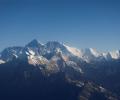
Research using NASA satellite images has revealed a concerning retreat of snow cover atop Mount Everest, indicating a lack of snow accumulation during the winter season of 2024-2025. This trend, observed through a 'rising snow line', suggests a warming climate and warmer, drier conditions prevailing in recent winters. Glaciologist Mauri Pelto attributes the snow cover loss to sublimation, where ice directly evaporates, contributing to the retreat of glaciers even above 6,000 meters on Mount Everest.

India-US relations, like Rome, were not built in a day, nor can they be demolished in a day.
All said and done, when the new global order emerges, India can only remain with the democracies, asserts Ambassador T P Sreenivasan.

The seasonal temperature would be above normal by more than one degree Celsius over Northwest India.
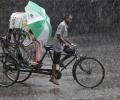
According to Skymet Weather, the initial surge in the Monsoon rains can be attributed to the transition of El Nino into the neutral phase.

East India, along with a major portion of central India, is likely to be at a higher risk of being rain deficient, especially during the first half of the season.
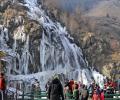
A cold wave has gripped many parts of north and east India, with Srinagar recording a minimum temperature of minus 5.3 degrees Celsius. Other areas experiencing below-freezing temperatures include Gulmarg, Pahalgam, Konibal, Qazigund, Kupwara, and Kokernag in Kashmir. Himachal Pradesh has issued an orange warning for severe cold wave conditions in several districts. Delhi recorded a minimum temperature of 5.9 degrees Celsius, while Faridkot in Punjab was the coldest in the region at 0 degrees Celsius. Extreme cold conditions also continued in parts of Rajasthan and Jharkhand. The Met office has forecast mainly dry weather until December 26, with the possibility of light snowfall in the higher reaches of Kashmir on the intervening night of December 21-22.

A cold wave has intensified in most parts of north India, with temperatures in the Kashmir Valley dipping below freezing point. The national capital saw a brief respite from the bitter cold during the day, but cold conditions persisted in parts of Rajasthan and Himachal Pradesh. The weather department has issued a yellow warning for cold wave, ground frost and dense fog for some places in Himachal Pradesh. There is a possibility of rain and snowfall in parts of northwest India later in the week.

El Nino is expected to occur in August-September, but it is unlikely to have any major impact on the monsoon, and the weatherman expects a positive Indian Ocean Dipole, which has a strong influence on rainfall in the country.
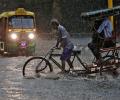
The IMD attributed the projection to a weakening of El Nio and the Indian Ocean Dipole turning positive.
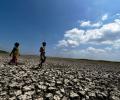
'The first two months of monsoon are not looking good.' 'In case both the halves fail, it is going to be misery.'
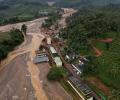
In the months immediately following the 2024 tragedy, reporting on the landslide per se had been a straightforward affair. On one side was death and destruction. On the other side, survivors and the business of survival. It was black and white. What direction to take was clear. Rehabilitation in comparison, felt like a complex situation. One that is fraught with shades of grey. As grey as human life, explains Shyam G Menon.

Brace for some warmth this winter as the India Meteorological Department (IMD) in its December-February forecast on Thursday said that the minimum and maximum temperatures could remain 'normal' to 'above normal' over most parts of Northwest and Northeast India. Both the minimum and maximum will remain below normal in Southern Peninsular and Central India in these winter months. While this could give some respite from the intense cold of North India, it could have a negative impact on the standing rabi crops if the temperature rise is unusual and abnormal.

The threshold for a heat wave is met when the maximum temperature of a weather station reaches at least 40 degrees Celsius in the plains, 37 degrees in coastal areas, and 30 degrees in hilly regions, and the departure from normal is at least 4.5 notches.

The five warmest years in Indian weather history have occurred in the past 14 years -- the others being 2009, 2017 and 2010, in order of intensity.

The southwest monsoon is set to make its exit in style, bringing rains to the parched parts of Uttar Pradesh and Bihar, as weather forecasters have picked up signs of formation of a cyclonic circulation over Bay of Bengal. Addressing a press conference in New Delhi, India Meteorological Department (IMD) director general Mrutyunjay Mohapatra on Thursday junked last week's forecast of early withdrawal of southwest monsoon and announced the extended stay of the seasonal showers. "Even though we expected early withdrawal of the southwest monsoon, a cyclonic circulation over west-central and adjoining northwest Bay of Bengal will shift the monsoon trough southwards around September 7.

The average temperatures observed pan-India for April was 35.05 degrees, which was the fourth highest in 122 years.

Cyclone 'Biparjoy', the first storm brewing in the Arabian Sea this year, has rapidly intensified into a severe cyclonic storm, with meteorologists predicting a 'mild' monsoon onset over Kerala and 'weak' progress beyond southern peninsular under its influence.
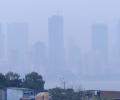
'If we don't control the additional pollutants that come from various human activities then, the pollution level will not come down.'

Scores of people die every year due to cold waves that sweep across the north Indian plains.

While the experience of summers has been uncomfortable, the actual readings on thermometers may cause wonder about the exaggerated discomfort. This is what meteorologists call 'real feel temperature' or 'real feel heat'. Sanjeeb Mukherjee explains.

'When you are travelling in Mumbai when the air quality is bad, you feel suffocated.' 'You may feel uncomfortable breathing Delhi air, but the level of discomfort is higher in Mumbai.'
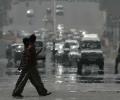
Several global models are predicting El Nio to appear around the second half of the year, which are the crucial rain-bearing months.

Data released by the IMD on Thursday showed that the mean minimum temperature (MMT) this December was 7.1 degrees Celsius.
Twelve out of the 15 warmest years since 1901 were during the past 15 years -- between 2006 and 2020, according to IMD data.

El Nino is often associated with below average warmer, dry weather across Asia Pacific region.

'The food security along the coastal region will be severely affected.'

PSG's Champions League tie with Newcastle is like a final, says Luis Enrique

India is the perfect place to innovate because locals are aware of what's needed and have the intellectual capacity and engineering excellence to create and think outside of the box.
